
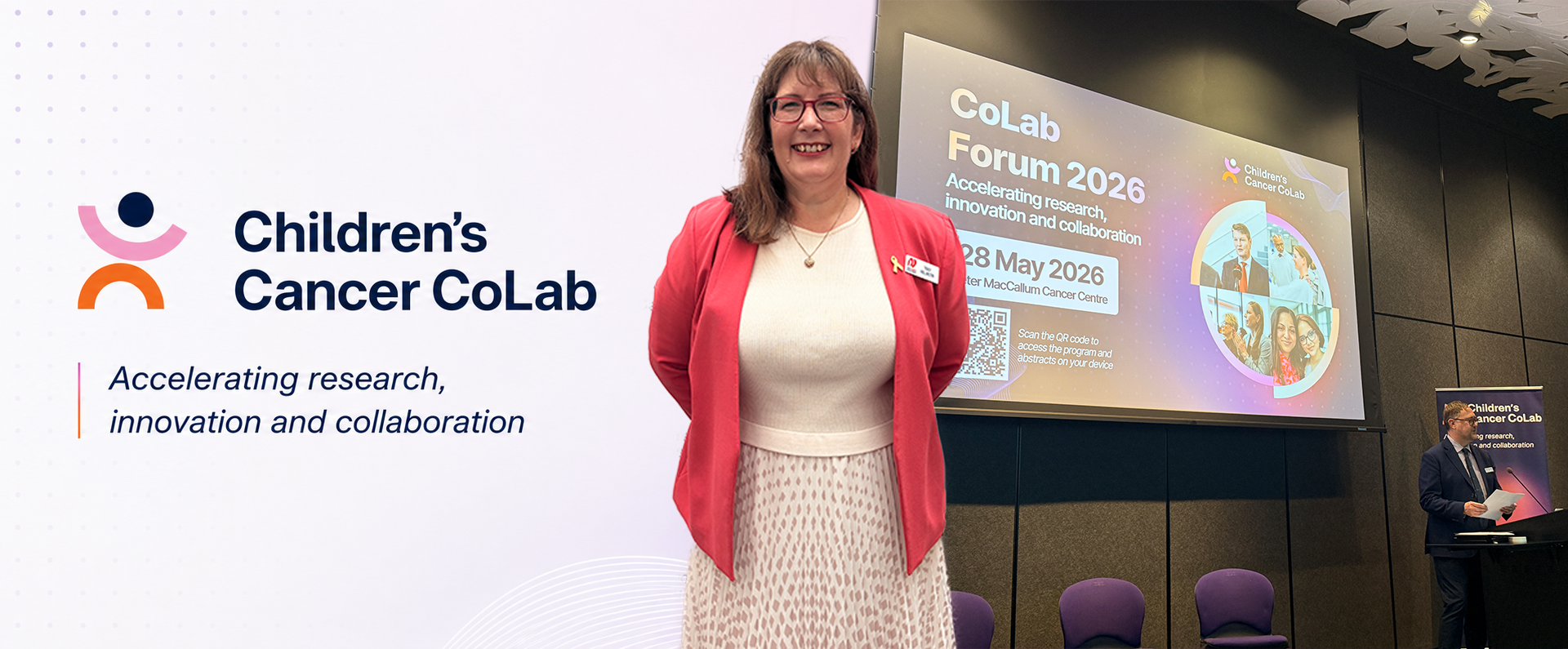
Child Cancer Research Foundation (CCRF) Chairperson Tracy Hollington has represented both Western Australia and the lived experience community today at the inaugural Children’s Cancer CoLab Forum 2026 in Melbourne.
Held at the Peter MacCallum Cancer Centre, the national forum brought together researchers, clinicians, advocates and lived experience representatives from across Australia to explore the future of childhood cancer research, treatment and survivorship care.
Tracy was invited to speak as part of a clinical research session examining how real-world evidence and patient experience can help improve outcomes for children and adolescents diagnosed with cancer. The session explored topics including financial toxicity, equitable access to care, survivorship, supportive care, precision medicine and long-term treatment impacts.
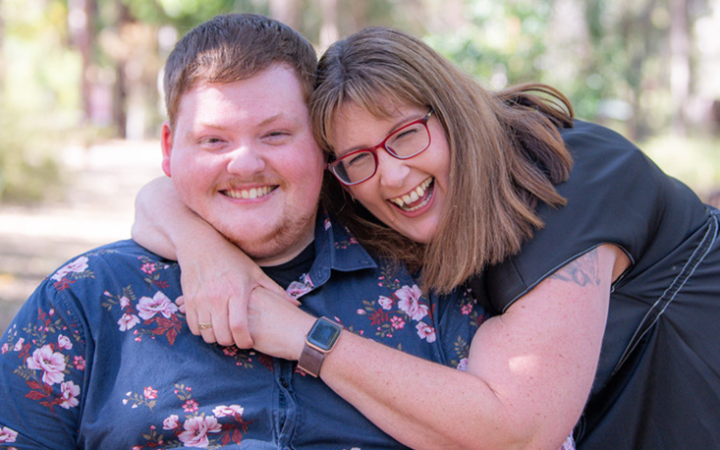
Drawing on her family’s own experience following her son Angus’ diagnosis with Ewing Sarcoma and later treatment-related Acute Myeloid Leukemia (AML), Tracy spoke openly about the lifelong effects childhood cancer can have on young people and their families long after treatment ends.
“We know the drill. Chemotherapy is damaging. It’s chemical warfare against cancer,” Tracy said during her presentation.
“But chemo is often the best we have, and that’s why we are here. Because our kids deserve better.”
Angus was just 11 years old when he first complained of pain in his leg. What initially appeared to be a simple ache soon became a diagnosis that would change the course of his life and his family’s future.
Over the years that followed, Angus endured surgeries, chemotherapy, extended hospital stays and complex limb salvage procedures. More than four years into remission, routine blood tests revealed another devastating diagnosis — treatment-related Acute Myeloid Leukemia caused by the chemotherapy used to treat his original cancer.
“The chemotherapy he had caused another, more deadly cancer,” Tracy said.
Angus ultimately underwent an amputation followed by a stem cell transplant during the height of the COVID-19 pandemic. Today, he lives with significant long-term health impacts including cardiomyopathy, infertility, neurocognitive challenges and disability resulting from treatment.
Tracy’s presentation highlighted the growing national conversation around survivorship and the reality that while childhood cancer survival rates have improved significantly, many survivors continue to face lifelong physical, emotional, educational and psychosocial challenges.
“Survival isn’t the end of the story,” Tracy said.
“We need better treatments that cause less fallout. We need stronger psychosocial support and systems that recognise the lifelong impacts childhood cancer can have on young people and their families.”
Her presentation also explored the often-overlooked impact childhood cancer has on siblings, family stability, education and future employment opportunities.
“I could talk about the impact on my daughter, and how siblings become the forgotten ones in this experience,” Tracy shared.
“How they suffer the same loss and grief with very little support, and how as parents we are in constant crisis and barely able to meet their needs let alone our own.”
CCRF is proud to see Tracy representing both the organisation and the lived experience community on a national stage, helping ensure the voices of survivors and families remain central to the future of childhood cancer research and care.
As Australia continues to improve survival outcomes for children diagnosed with cancer, forums such as the Children’s Cancer CoLab Forum play an important role in driving conversations around not only cure, but quality of life, survivorship and long-term wellbeing.
For more than four decades, CCRF has funded childhood cancer research while continuing to advocate for improved outcomes for children, adolescents and survivors affected by cancer.